
Introduction
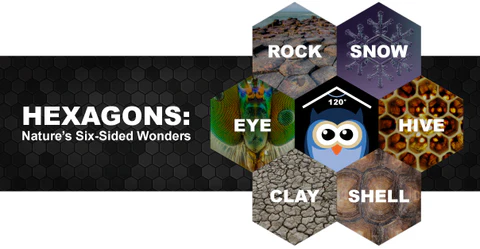
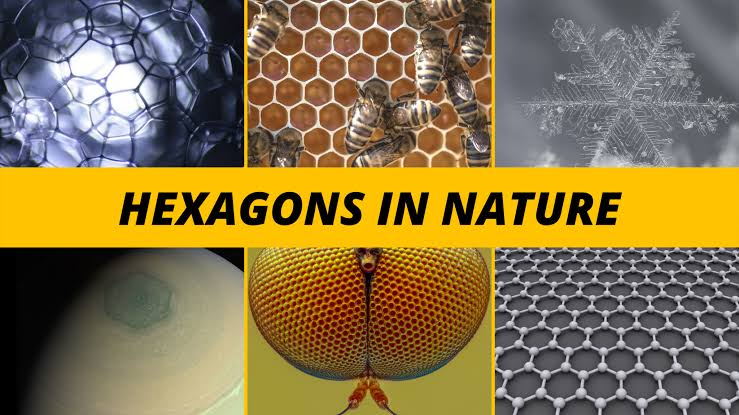
The hexagon form is one of the maximum splendid and efficient geometric forms found in both nature and human design. described with the aid of its six facets and six angles, the hexagon seems in infinite places—from the honeycombs constructed by means of bees to the complicated shape of snowflakes and even the molecular arrangement of carbon atoms in graphene.
Its unique mixture of power, symmetry, and area efficiency has made the hexagon an important shape in arithmetic, engineering, structure, chemistry, and design. whether you’re analyzing geometry or really curious approximately the world round you, know-how the hexagon reveals why this six-sided parent is so not unusual and critical.
In this text, we’ll explore what a hexagon is, its mathematical residences, in which it seems in nature, real-global packages, and why it keeps to encourage scientists, engineers, and architects.
What’s a Hexagon?
A hexagon is a polygon with:
- Six sides
- Six vertices (corners)
- Six indoors angles
The phrase “hexagon” comes from the Greek words “hexa”, meaning six, and “gonia”, that means perspective.
There are extraordinary forms of hexagons, but the maximum familiar is the ordinary hexagon, in which:
- All six aspects are same in length.
- All six indoors angles degree a hundred and twenty stages.
because of its symmetry, the ordinary hexagon is broadly used in geometry and layout.
Varieties of Hexagons
ordinary Hexagon
A regular hexagon has:
- Six identical sides
- Six identical angles
- Rotational and reflectional symmetry
that is the hexagon most commonly visible in mathematics and nature.
Abnormal Hexagon
An irregular hexagon also has six aspects, but the facet lengths and angles are not all equal.
irregular hexagons are typically located in architectural layouts, creative designs, and herbal formations.
Convex Hexagon
In a convex hexagon:
- every interior angle is much less than a hundred and eighty tiers.
- All vertices factor outward.
this is the maximum not unusual type of hexagon.
Concave Hexagon
A concave hexagon carries at least one indoors attitude greater than one hundred eighty tiers, developing an inward “dent” inside the form.
Mathematical houses of a Hexagon
A normal hexagon has numerous exciting mathematical characteristics.
The place of a ordinary hexagon depends on the length of 1 aspect, represented by means of a.
extra residences include:
- wide variety of aspects: 6
- wide variety of angles: 6
- Sum of interior angles: 720°
- every interior angle (regular hexagon): one hundred twenty°
- wide variety of diagonals: nine
those properties make the hexagon a famous topic in geometry.
Why Is the Hexagon So special?
The hexagon sticks out as it combines performance, strength, and symmetry better than many other shapes.
Excellent area efficiency
everyday hexagons healthy collectively perfectly with out leaving gaps.
This property, known as tessellation, lets in huge surfaces to be covered successfully.
Examples include:
- Honeycombs
- floor tiles
- Pavements
- sport forums
Excessive Structural energy
Hexagonal systems distribute force evenly throughout their sides.
This makes them stronger than many other geometric arrangements even as the usage of exceedingly little material.
because of this, engineers often use hexagonal patterns in light-weight systems.
Herbal Symmetry
The balanced look of a ordinary hexagon makes it visually captivating and mathematically stable.
Its symmetry is one reason it seems so frequently in herbal systems.
Hexagons in Nature
Nature gives many examples of hexagonal patterns.
Honeycombs
Honeybees assemble honeycombs using hexagonal cells.
Scientists trust this design allows bees to store the best amount of honey even as the usage of the least quantity of wax.
it’s miles taken into consideration certainly one of nature’s most efficient engineering answers.
Snowflakes
most snowflakes show off six-fold symmetry due to the fact water molecules arrange themselves in a hexagonal crystal shape as they freeze.
although each snowflake is specific, this six-sided symmetry stays regular.
Basalt Columns
sure volcanic rock formations cool into hanging hexagonal columns.
those natural structures may be determined in numerous locations round the arena and exhibit how bodily methods create geometric styles.
Molecular structures
In chemistry, carbon atoms frequently shape hexagonal arrangements.
Examples consist of:
- Graphene
- Graphite
- a few molecular crystal systems
those substances are regarded for their first rate energy and electric houses.
Hexagons in regular life
The hexagon seems in many familiar items.
common examples encompass:
- Nuts and bolts
- soccer ball patterns
- Tile floors
- ornamental designs
- Board games
- corporate trademarks
Its practical blessings make it beneficial in each engineering and product layout.
Applications in Engineering and architecture
Engineers often use hexagonal designs because they provide power at the same time as reducing fabric usage.
applications encompass:
- Bridges
- Aerospace components
- constructing facades
- Structural frameworks
- light-weight panels
Architects additionally recognize the hexagon’s modern appearance and green use of space.
Hexagons in science
Scientists come across hexagonal structures in many fields.
Chemistry
Carbon-based substances which include graphene encompass repeating hexagonal styles.
Biology
mobile preparations and microscopic organisms sometimes show hexagonal organisation.
Physics
Crystal structures often shape hexagonal lattices because of the manner atoms certainly arrange themselves.
Hexagons in design and art
picture designers regularly use hexagons due to the fact they invent easy, balanced compositions.
they are popular in:
- trademarks
- Infographics
- person interfaces
- digital illustrations
- Packaging
- Architectural ideas
The form conveys ideas of precision, innovation, and connectivity.
Fun records approximately Hexagons
- A normal hexagon has six same aspects.
- Its interior angles upload as much as 720 degrees.
- Bees clearly build hexagonal honeycombs.
- Snowflakes display six-fold symmetry.
- Hexagons tessellate with out gaps.
- Graphene, one of the most powerful recognized substances, is built from hexagonal carbon atoms.
- Many mechanical fasteners use hexagonal heads for improved grip.
Why the Hexagon maintains to inspire Innovation
The hexagon’s amazing stability of efficiency and power continues to steer current technology and engineering. Researchers observe hexagonal structures to increase lighter plane components, more potent construction substances, advanced electronics, and electricity-efficient designs.
As era evolves, this easy six-sided form stays a supply of proposal for solving complicated engineering demanding situations.
Conclusion
The hexagon shape is a long way greater than a fundamental geometric discern. Its precise mixture of symmetry, strength, and area efficiency has made it one of the maximum crucial shapes in arithmetic, nature, science, and engineering. From the honeycombs constructed by bees to advanced materials like graphene, hexagonal styles display how stylish geometry can produce particularly efficient designs.
whether you’re getting to know geometry, exploring natural phenomena, or studying current engineering, the hexagon serves as a effective reminder that some of the world’s maximum outstanding innovations start with simple shapes.
FAQs
what is a hexagon?
A hexagon is a polygon with six aspects, six angles, and six vertices.
what is a normal hexagon?
A regular hexagon has six equal facets and six same interior angles of 120 tiers each.
Why do bees use hexagons in honeycombs?
Hexagonal cells maximize storage space at the same time as minimizing the quantity of wax needed, making them fantastically green.
where are hexagons discovered in nature?
Hexagons seem in honeycombs, snowflakes, basalt rock columns, and certain molecular structures including graphene.
what is the sum of the interior angles of a hexagon?
The interior angles of any hexagon upload up to 720 degrees.
Why are hexagons utilized in engineering?
Their geometry affords top notch energy, balance, and green use of materials.
Can hexagons tessellate?
yes. normal hexagons in shape together perfectly without leaving gaps, making them ideal for tiling and structural designs.
Why is the hexagon vital in science?
Hexagonal systems seem in chemistry, biology, and physics, influencing the whole thing from crystal formation to superior materials and nano technology.

